Why Is Printer Ink So Expensive? What You’re Really Paying For
The business model, the chemistry, the waste, and the smartest ways to stop overpaying.
The Short Answer: A Razor-and-Blades Business
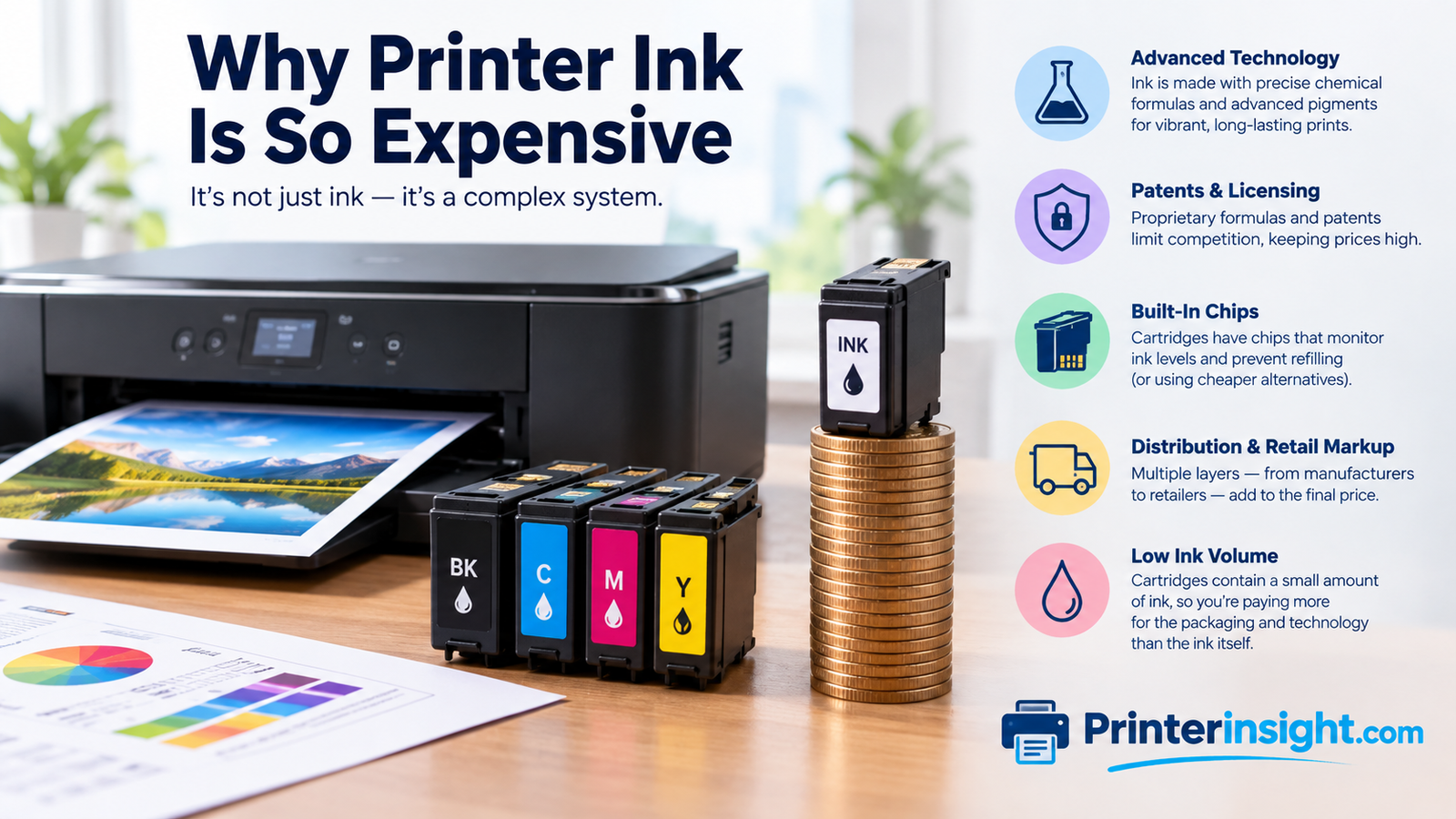
Printer ink is expensive because most printer makers earn their profit on the consumables, not the machine. The printer is priced low to get it into your home, and the ink you buy for years afterward pays for the whole arrangement. It is the same logic behind cheap razors and costly blades.
That is not the whole story, though. Ink really is a complicated product, the cartridges are engineered for specific machines, and a good share of what you pay for never reaches the paper. This guide walks through each layer so you can decide where to save. If you want to skip ahead to solutions, start with our roundup of the home printers with the cheapest ink.
Ready to compare options?
Shop Printer Ink on AmazonHow the Printer Business Model Really Works
Walk through any electronics aisle and you will notice that inkjet printers sell for surprisingly little. Manufacturers often sell hardware at thin margins, or close to break-even, because the customer is worth far more over time as a repeat buyer of cartridges.
This changes how you should shop. The sticker price is only the entry fee. A cheap printer with expensive, low-capacity cartridges can cost several times more over its life than a pricier model with efficient supplies. Think of ownership cost, not purchase price, as the number that matters.
Ready to compare options?
Browse Inkjet PrintersCartridge Design, Chips, and Built-In Lock-In
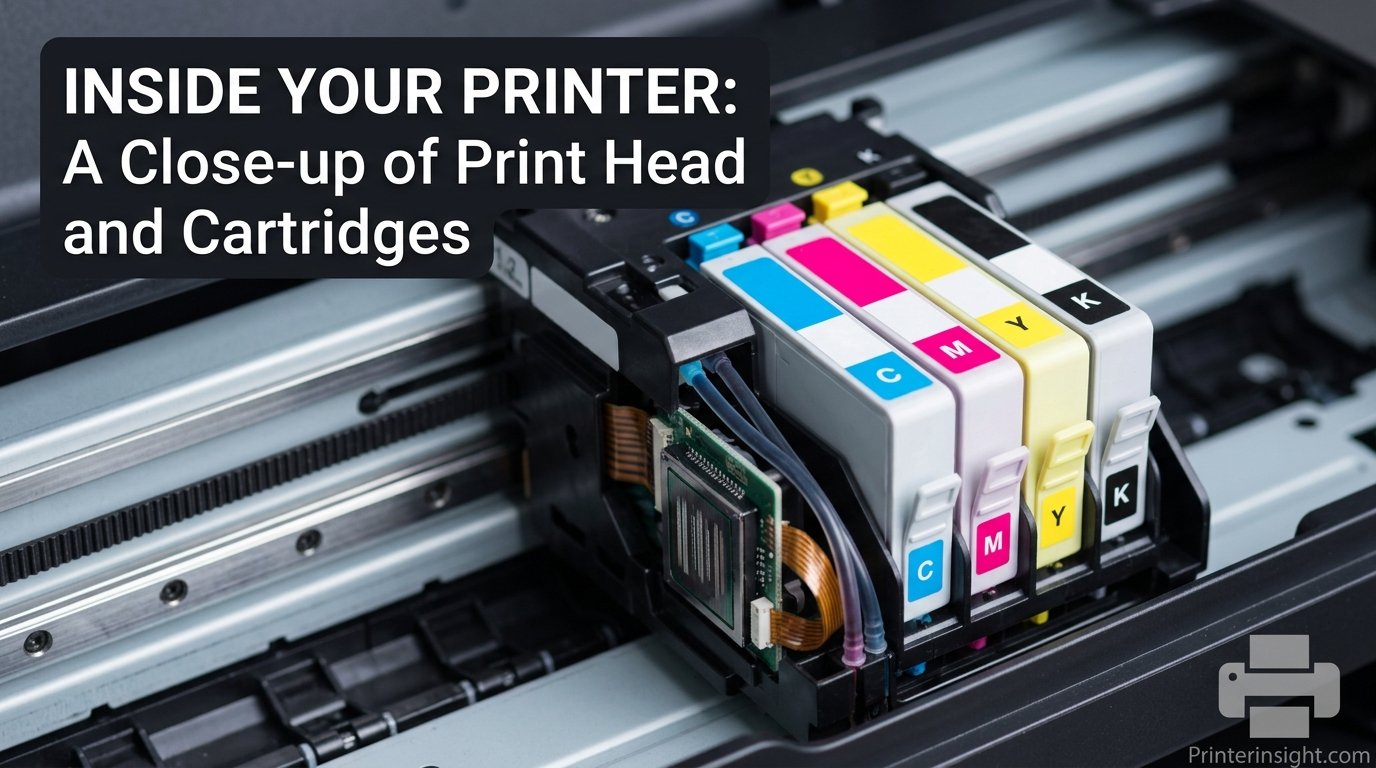
Modern cartridges are not just plastic boxes of liquid. Many contain electronics: a small chip that tracks fill level, confirms the cartridge is compatible, and sometimes reports back to the printer’s firmware. Some designs even bundle the print head into the cartridge, which means you are partly replacing a mechanical part every time.
These features have legitimate purposes, such as protecting the printer from a bad fit. They also make it harder for competitors to sell compatible supplies, which keeps prices firm. Firmware updates have, at times, blocked third-party cartridges that previously worked, something worth checking before you buy. For a broader look at upkeep, see our home printer maintenance tips.
Ready to compare options?
See Cartridges on AmazonInk Is Precision Fluid, Not Colored Water
Inkjet ink has to do several jobs at once. It must flow through nozzles thinner than a hair, dry quickly on paper without smearing, resist fading, avoid clogging, and stay stable in a cartridge for months. Achieving that balance takes real chemistry, testing, and quality control.
Photo inks add another layer, with extra colors and pigments tuned for smooth gradients and longer-lasting prints. Development costs for these formulations are spread across the ink you buy. It explains part of the price, though not the size of the markup compared with the raw materials.
Ready to compare options?
Shop Photo Printer InkThe Real Cost Per Page
The most useful way to judge ink is cost per page: the price of a cartridge divided by how many pages it prints. Manufacturers publish page yields, based on standardized test pages with light coverage, so real-world numbers are usually lower.
| Printer type | Upfront cost | Typical supply cost | Best for |
|---|---|---|---|
| Cartridge inkjet | Low | High per page | Occasional printing |
| Ink tank | Higher | Very low per page | Frequent printing |
| Laser (toner) | Medium to high | Low per page | Text-heavy documents |
| Subscription inkjet | Low | Fixed monthly plan | Predictable volume |
Our comparison of the cost of printer ink vs toner digs into the numbers in more detail.
Ready to compare options?
Compare Printers on AmazonWhy So Much Ink Never Reaches the Page
Some of the ink you pay for is used before you print a single document. Starting a new printer fills the print head. Cleaning cycles run automatically after long idle periods, and each one flushes ink through the nozzles into a waste pad.
Color cartridges can add to this. Many printers use separate colors, so one running out may stop a print job while the others still hold ink. Black-only jobs can also draw small amounts of color to maintain the heads. The more rarely you print, the more of your ink goes to upkeep rather than pages.
Ready to compare options?
Shop Ink MultipacksStarter Cartridges and Low-Yield Supplies
The cartridges packed in the box with a new printer are often partially filled, sometimes far less than a standard replacement. This keeps the printer’s price down and pushes you to buy supplies sooner.
Retail shelves also stock standard and high-yield versions of the same cartridge. The high-yield option almost always costs less per page, even though the up-front price stings more. If you print regularly, buying the larger size is one of the simplest ways to cut costs without changing hardware.
Ready to compare options?
Find High-Yield CartridgesSubscription Plans and Firmware Restrictions
Many manufacturers now offer ink subscriptions that charge by pages printed each month and ship cartridges automatically. For light and predictable printing they can be cheaper than buying on demand, and they remove the risk of running out mid-project.
The trade-offs are real. Printers tied to a plan may stop working with regular cartridges, and canceling can leave you with a printer that refuses to print until you rejoin or buy compatible supplies. Read the terms closely, and compare the plan’s cost per page to buying high-yield cartridges yourself.
Ready to compare options?
See Subscription-Ready PrintersThird-Party and Refilled Cartridges: Savings and Risks
Compatible and remanufactured cartridges can cost much less than name-brand ones, and many people use them happily. Quality varies, though. Poor ink can clog nozzles, produce off colors, or fade sooner, and a bad cartridge may leak into the printer.
If you go this route, buy from sellers with clear return policies, avoid the very cheapest unknown brands, and check whether your printer’s firmware accepts them. Also remember that some warranties treat third-party supplies differently, so read the fine print.
Ready to compare options?
Browse Compatible CartridgesInk Tank Printers: The Real Structural Fix
Ink tank printers replace small cartridges with large refillable reservoirs and sell ink in bottles. The bottles cost far less per milliliter, and a single set can print thousands of pages. This design attacks the root of the problem, which is the cartridge pricing model.
You pay more for the printer itself, but the running cost drops sharply, so heavier users tend to come out ahead. Read our guide on whether ink tank printers are worth it, see the best ink tank printers for home, or compare the Epson EcoTank and HP Smart Tank. Detailed reviews of the Epson EcoTank, Canon MegaTank and HP Smart Tank are available too.
Ready to compare options?
Shop Ink Tank PrintersWould a Laser Printer Be Cheaper?
Laser printers use toner powder instead of liquid ink. Toner does not dry out, so a laser printer that sits idle for weeks will still be ready to go. Supplies cost more up front, but they last long, and the per-page cost is typically low for text.
Lasers are less ideal for photos, and color models can cost more to buy. For mostly black-and-white documents, though, they are hard to beat. Start with our overview of the inkjet vs laser decision and the best laser printers for home.
Ready to compare options?
Shop Home Laser PrintersPractical Ways to Spend Less on Ink
You do not have to switch printers to save. Print in draft or standard quality for everyday documents, choose black-only when color is not needed, and check print previews to avoid wasted pages. Turn the printer off with its own power button so it can cap the print heads properly.
Dried ink is another hidden cost, so learn how to prevent your inkjet from drying out, clean the print heads only when needed, and store spare cartridges correctly. Printing something small every week or two keeps nozzles healthy.
Ready to compare options?
Find Ink-Saving PrintersChoosing a Printer That Won’t Drain Your Wallet
Before you buy, estimate how much you print. If it is a few pages a month, a low-cost inkjet or a laser is fine. If you print weekly or more, an ink tank model usually pays for itself. Check cartridge or bottle yields and prices before committing, and look at whether the maker restricts third-party supplies.
Browse our best home printers worth buying list, and if photos matter, see the best printers for photos at home. Whatever you pick, plan around running costs rather than the price tag alone.
Ready to compare options?
Shop Home PrintersFrequently Asked Questions
Why is printer ink so expensive compared with other liquids?
Because you are paying for precision formulation, engineered cartridges, and a business model where manufacturers earn most of their profit from supplies rather than hardware.
Is printer ink really more expensive than perfume or other costly liquids?
By volume, it is often priced very high, though cartridges hold small amounts. Comparisons vary depending on the ink and the size of the cartridge.
Why do cartridges run out so quickly?
Starter cartridges are often partly filled, and cleaning cycles, color mixing, and heavy-coverage pages all use ink beyond simple text.
Are third-party cartridges safe to use?
Many work well, but quality varies. Choose reputable sellers, and check that your printer’s firmware accepts them.
Are ink tank printers cheaper in the long run?
For frequent printing, usually yes. The higher purchase price is offset by much lower cost per page.
Is toner cheaper than ink?
Per page, toner is often cheaper for text documents, and it does not dry out when a printer sits unused.
Do ink subscriptions save money?
They can for steady, predictable printing. Compare the plan cost to high-yield cartridges and check the cancellation rules.
Does printing less often waste ink?
It can, because idle printers run cleaning cycles and ink can dry. Occasional light printing helps prevent this.
Does draft mode really save ink?
Yes. Draft or standard quality lays down less ink and is fine for everyday documents.
Should I buy high-yield cartridges?
If you print regularly, they usually cost less per page than standard sizes.
Why won’t my printer accept a new cartridge?
It may be a chip or firmware restriction, an incorrectly seated cartridge, or an incompatible model number.
Conclusion: Spend Smarter, Not Just Less
Printer ink is expensive because of a mix of business strategy, engineering, and real chemistry. You cannot change how manufacturers price supplies, but you can change how you buy. Check cost per page before choosing a printer, use high-yield cartridges, print regularly enough to keep nozzles healthy, and consider an ink tank or laser model if you print often.
Ready to compare options?
Find a Lower-Cost Printer on Amazon